Soft Actuation & Robotics
Soft materials that turn molecular order into motion
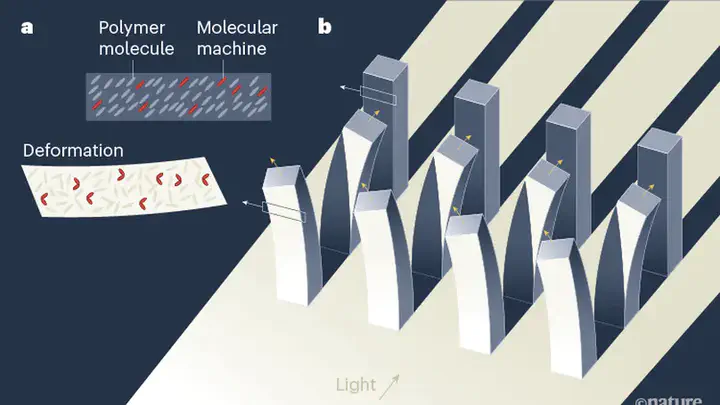 Image credit: Nature, 2022
Soft actuators are polymeric materials that convert light, heat, liquid, or other stimuli into motion. Their behavior emerges from the coupling of molecular order, network mechanics, anisotropy, and architecture. We use liquid-crystalline elastomers, responsive polymers, and microfabrication to design multistep, self-regulated, and non-reciprocal motions. These principles guide soft robots, microactuators, and adaptive devices.
Selected papers
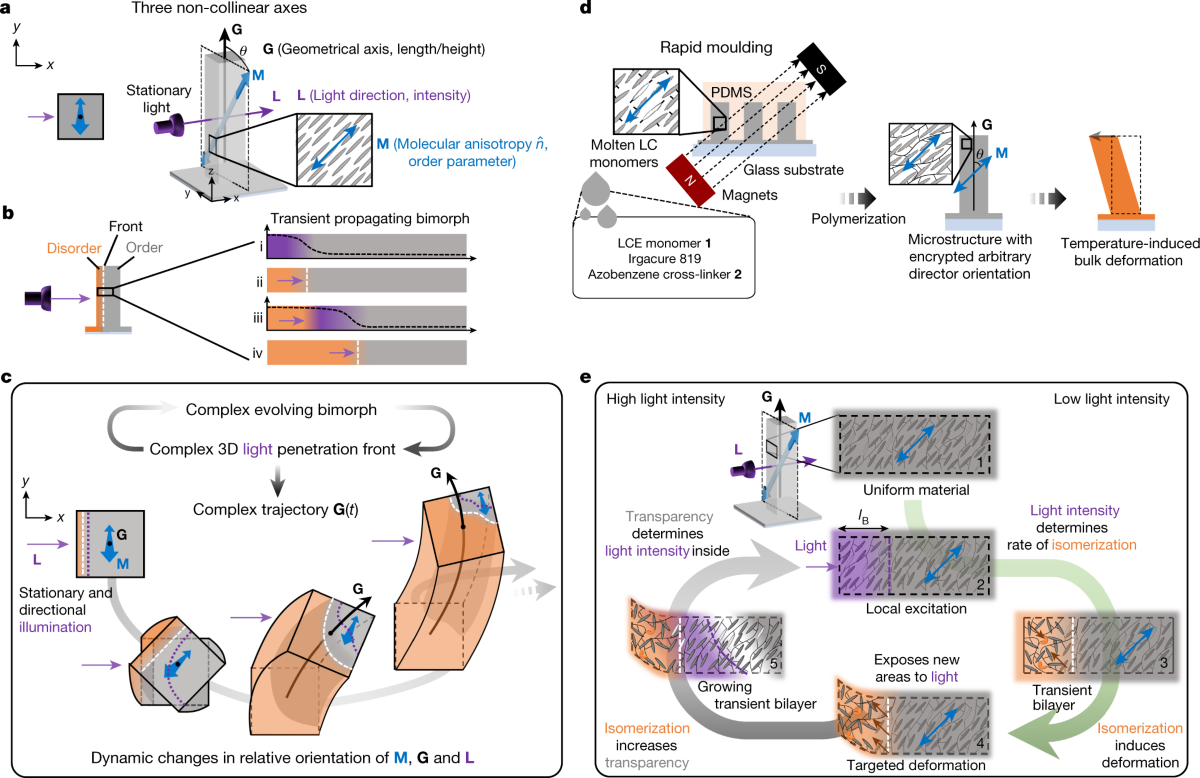
Self-regulated non-reciprocal motions in single-material microstructures
We show how a single responsive material can generate autonomous, non-reciprocal motion through coupled deformation and feedback.
Read the paper →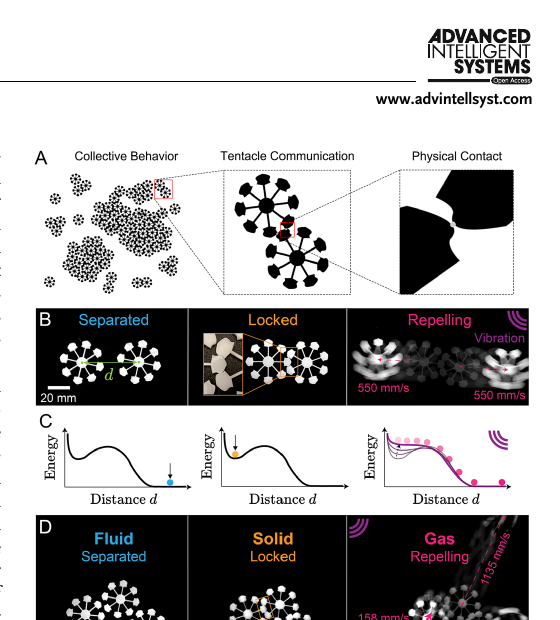
Electronic-Free Particle Robots Communicate through Architected Tentacles
We develop particle robots whose tentacle geometry encodes contact-based communication, locking, repulsion, and collective deployment without electronics.
Read the paper →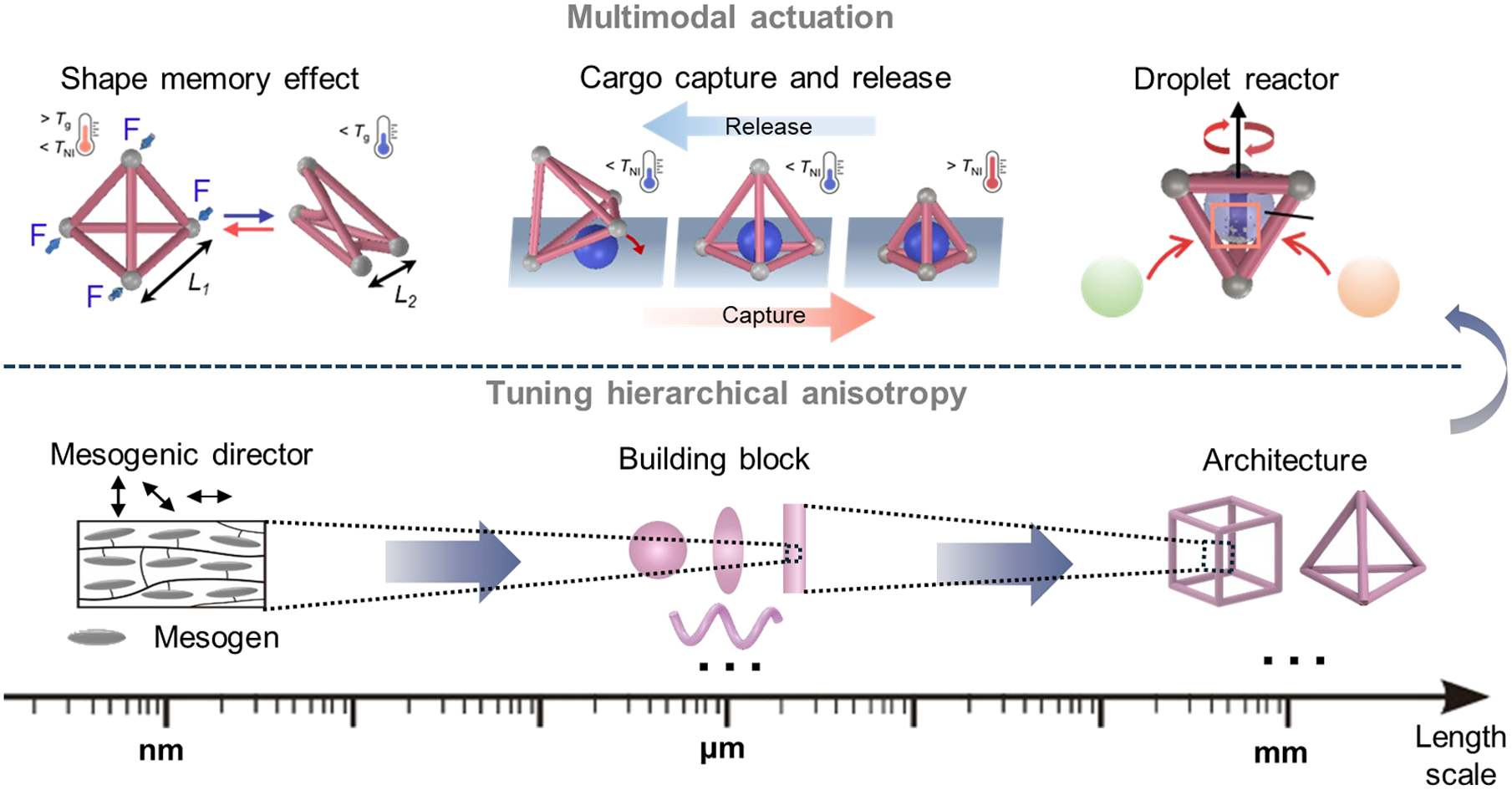
Programming hierarchical anisotropy in microactuators for multimodal actuation
We program molecular, shape, and architectural anisotropy to create LCE microactuators that expand, contract, twist, bend, and reconfigure.
Read the paper →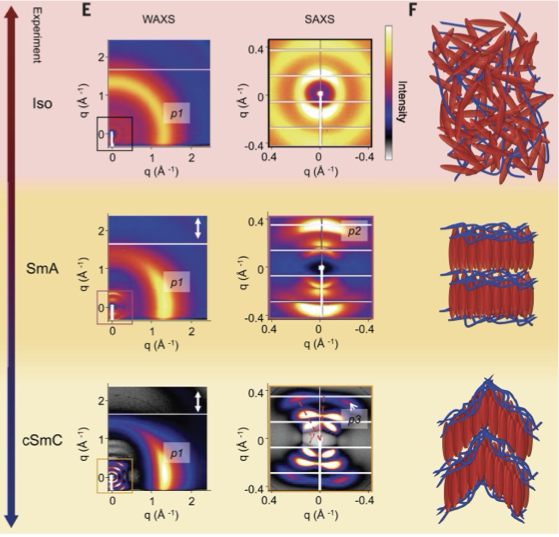
Programming liquid crystal elastomers for multistep ambidirectional deformability
We design LCEs with coupled mesophases that produce reversible, multistep motion in opposite directions, including twisting, tilting, shrinkage, and expansion.
Read the paper →