Hydrogels & Transport
Water-rich materials for transport, capture, and adaptation
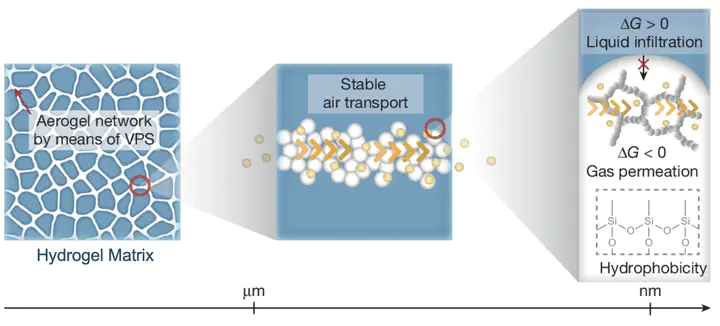 Image credit: Nature, 2026
Hydrogels are water-rich polymer networks that combine the softness of biological tissues with the chemical and mechanical tunability of synthetic materials. They can absorb, transport, and release water and gases, while changing shape or mechanics in response to their environment. We use polymer chemistry, phase engineering, mechanics, and structural design to understand how molecular interactions and multiscale architecture govern transport and response. These principles guide the design of breathable soft interfaces, atmospheric water-harvesting systems, and adaptive hydrogel devices.
Selected papers
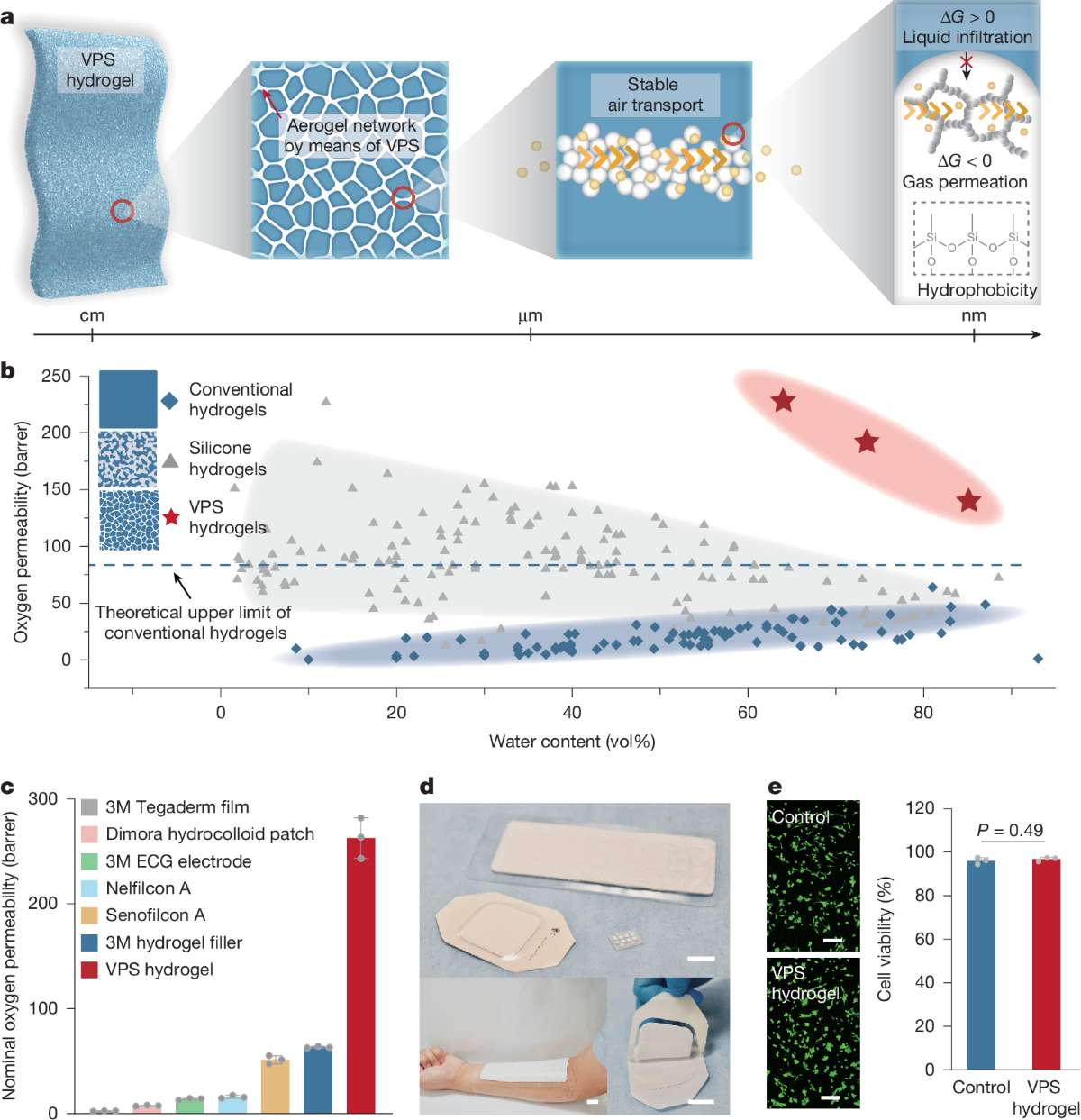
Air-permeable hydrogels through viscoelastic phase separation of aerogels
We create a stable, air-rich network inside high-water-content hydrogels, enabling efficient gas exchange without sacrificing softness or hydration.
Read the paper →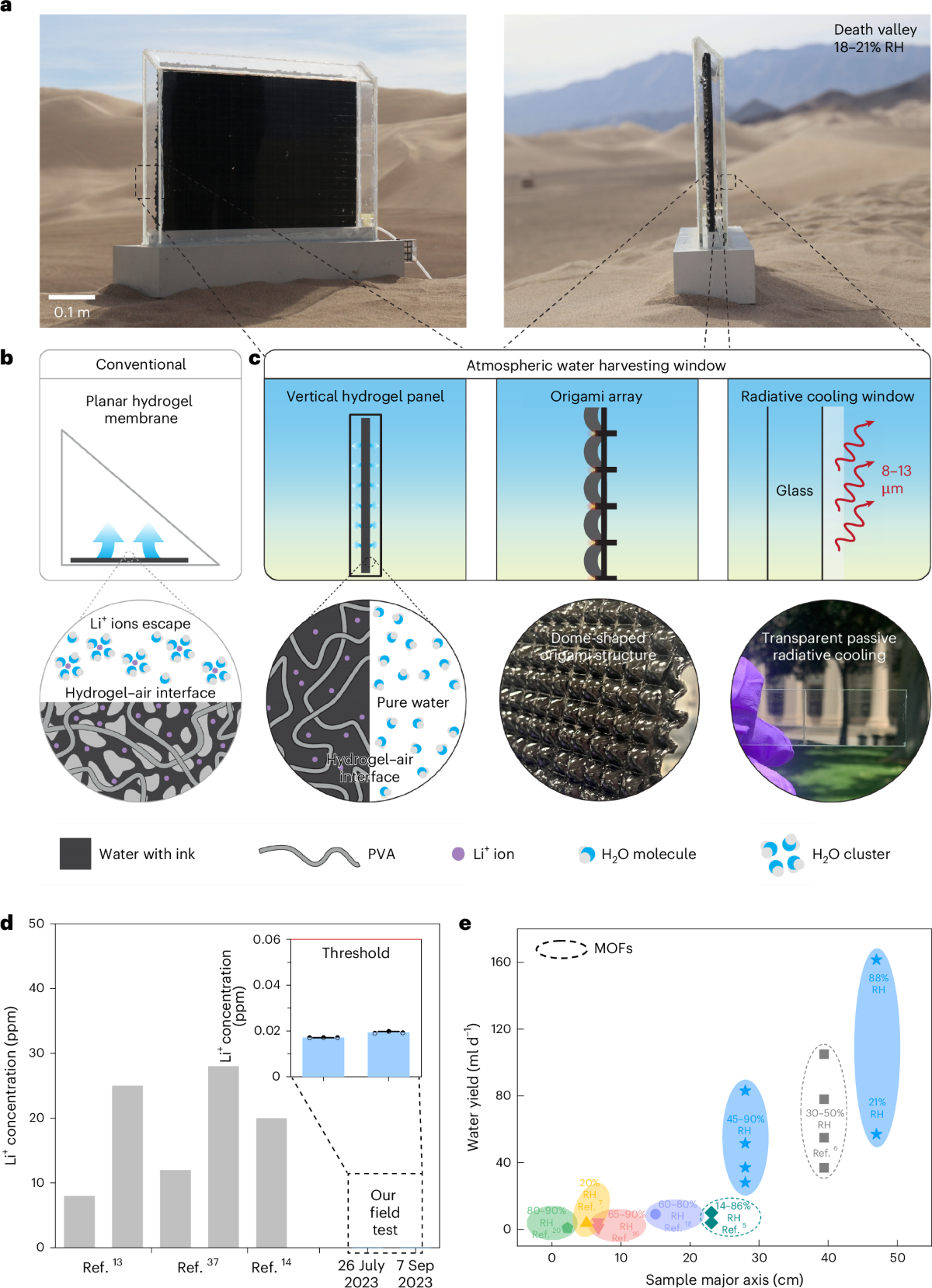
A metre-scale vertical origami hydrogel panel for atmospheric water harvesting in Death Valley
We integrate a vertical hydrogel panel, origami architecture, and passive solar regeneration into a scalable atmospheric water-harvesting window.
Read the paper →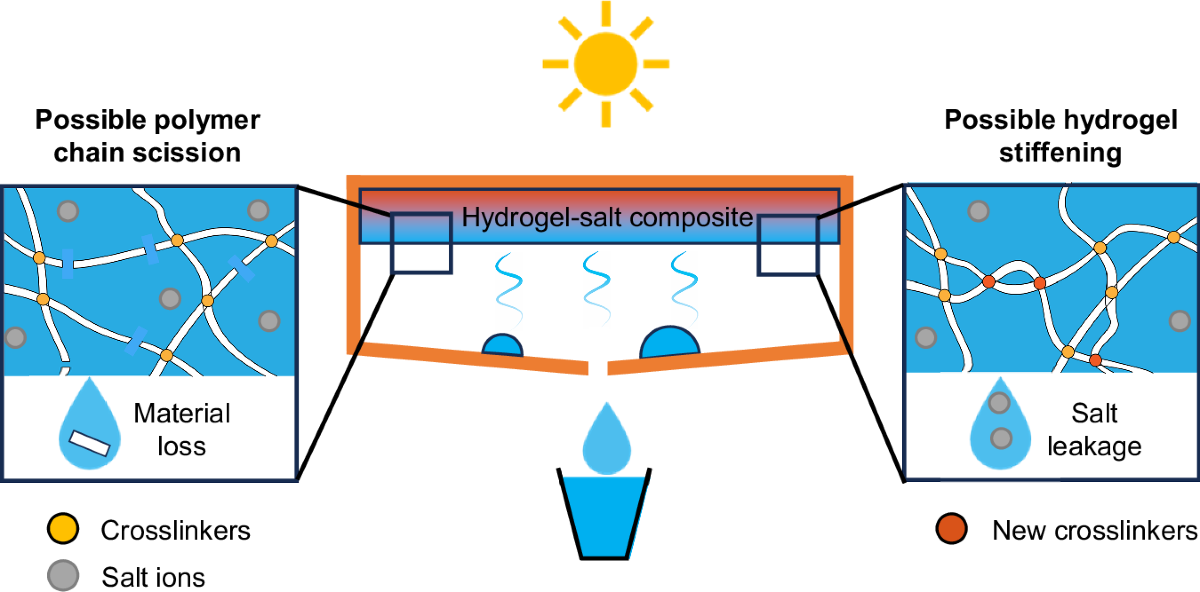
Long-term stability of moisture-capturing hydrogels by preventing metal-mediated degradation
We identify metal-mediated degradation in hydrogel-salt composites and show how protective coatings enable stable, repeated moisture capture and release.
Read the paper →