Reconfigurable Architectures
Programmable transformations from molecular alignment to cellular topology
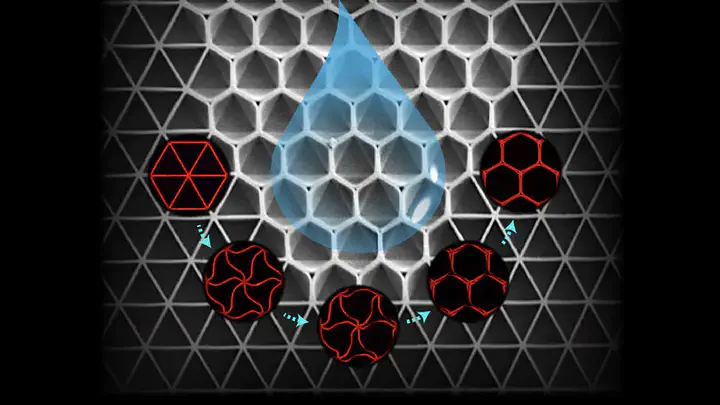 Image credit: Nature, 2021
Responsive architectures translate local molecular changes into collective shape and topology. We combine liquid-crystal alignment, cellular geometry, and phase behavior to understand how connectivity controls transformation. This approach enables reconfigurable materials with programmable mechanical, optical, and interfacial functions for soft machines and adaptive structures.
Selected papers
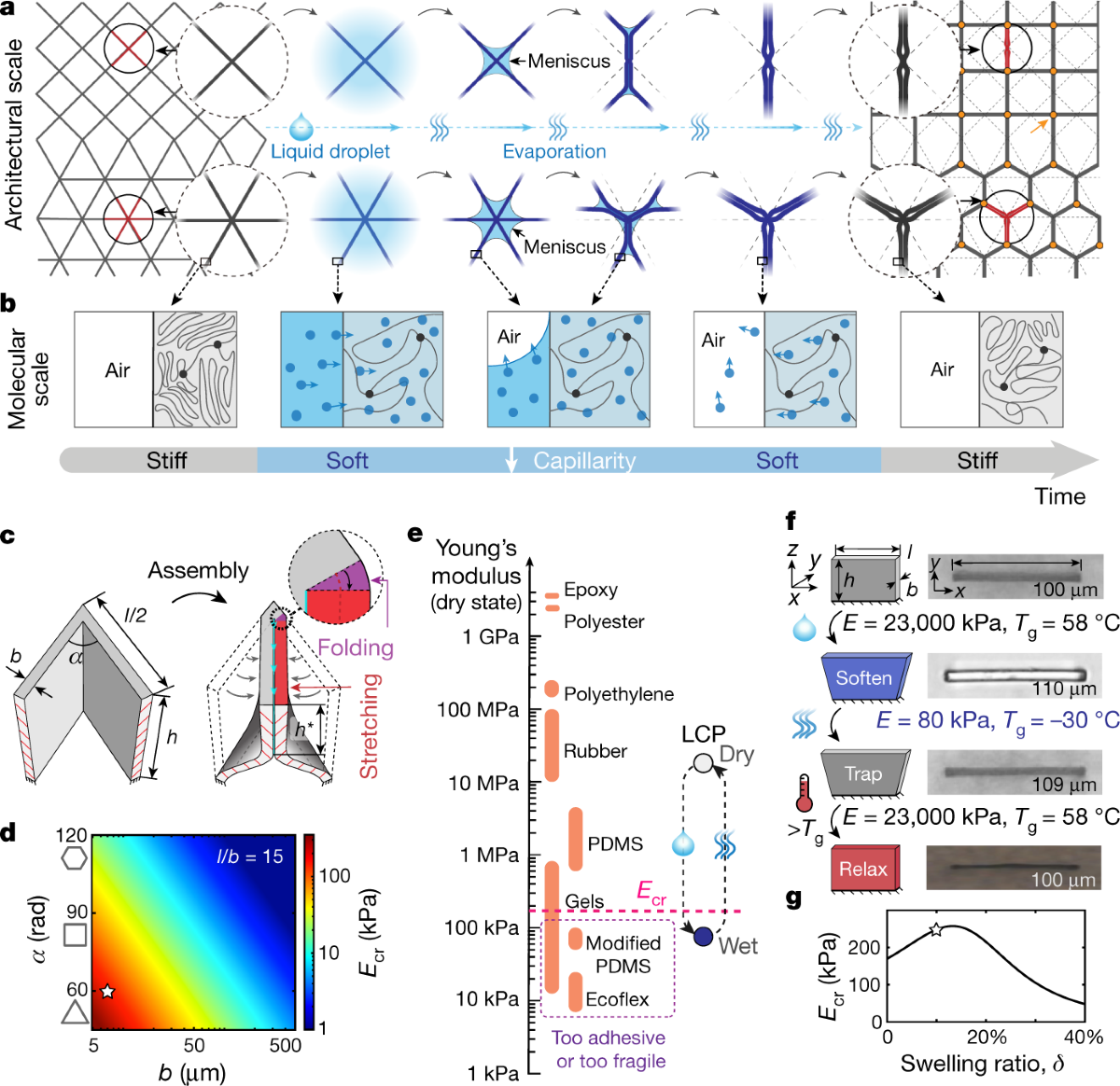
Liquid-induced topological transformations of cellular microstructures
We demonstrate that liquid uptake can drive reversible changes in the topology and geometry of cellular microstructures.
Read the paper →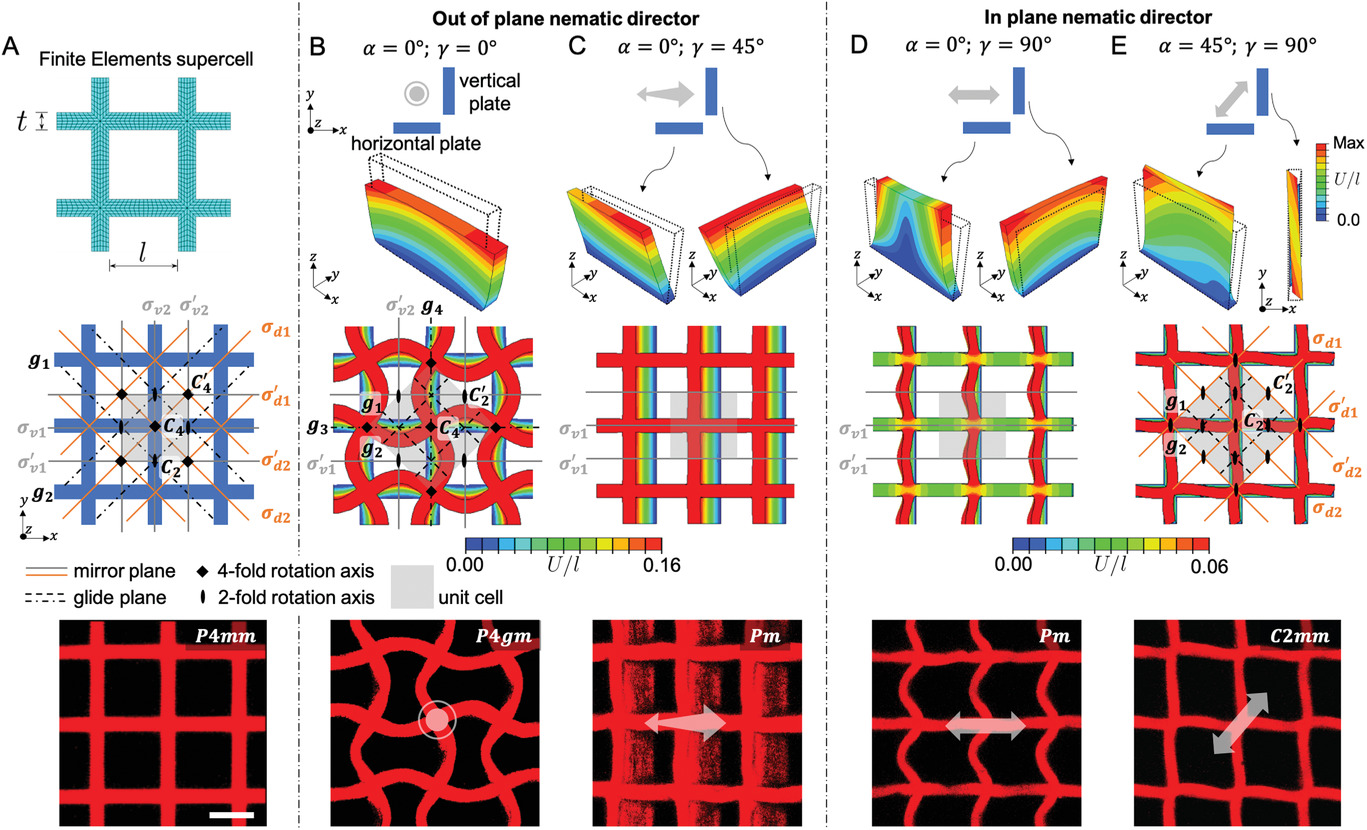
Controlling liquid crystal orientations for programmable anisotropic transformations in cellular microstructures
We couple local liquid-crystal orientation with cellular architecture to program anisotropic shape change across a microstructured material.
Read the paper →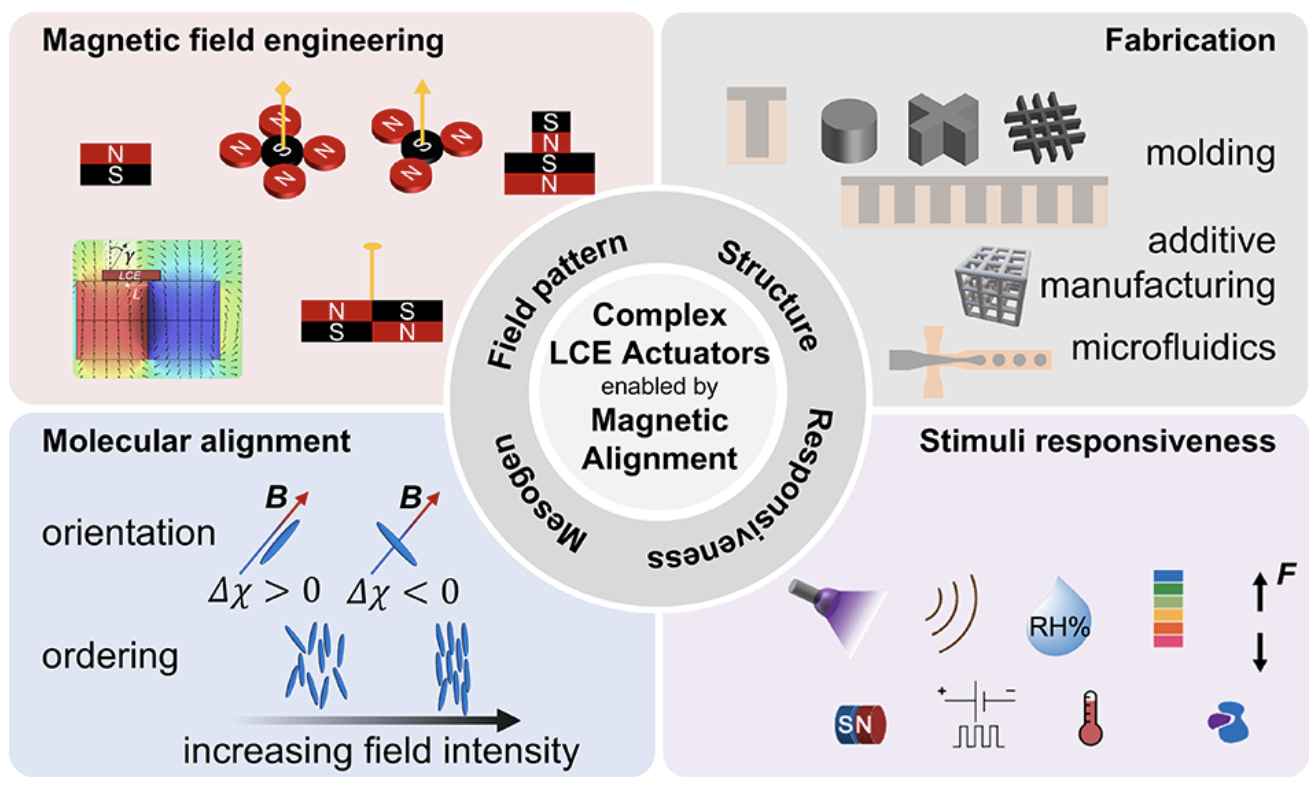
Programming deformations of 3D microstructures: Opportunities enabled by magnetic alignment of liquid crystalline elastomers
We review how magnetic alignment and multiscale design can program complex deformations in three-dimensional liquid-crystal elastomer architectures.
Read the paper →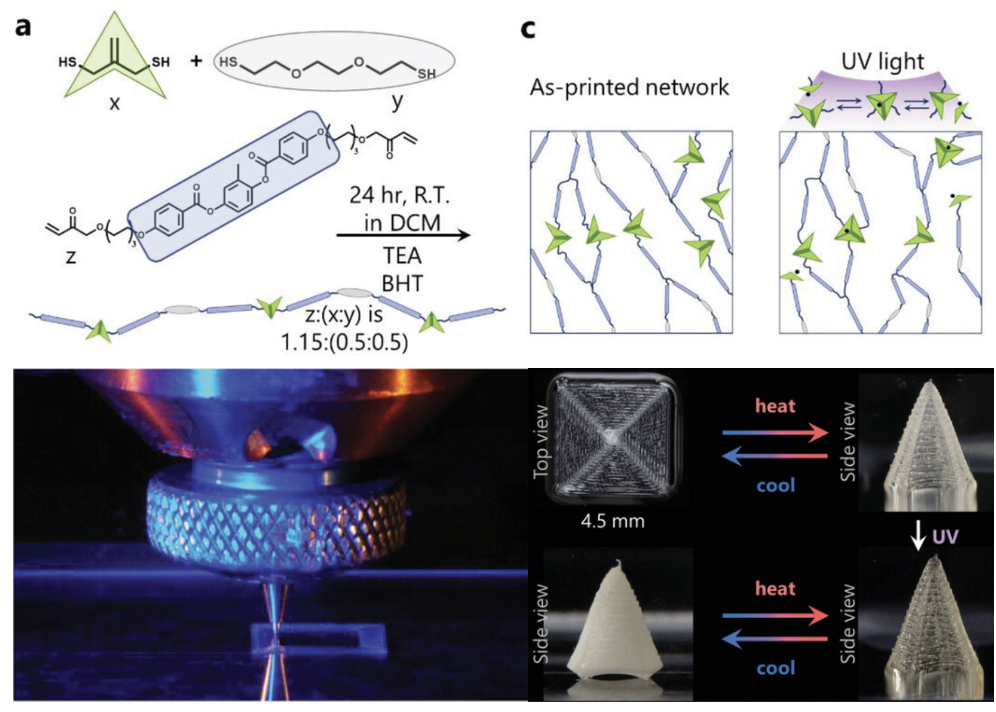
3D printable and reconfigurable liquid crystal elastomers with light-induced shape memory
We combine 3D printing and dynamic bond exchange to create reconfigurable LCE structures with light-induced shape memory.
Read the paper →